
Yes, you can remove a load-bearing wall in your New Jersey home.
Open floor plans are everywhere right now. That idea of one big, connected space where the kitchen flows into the dining area and the light just pours in from every direction is so appealing.
And for many NJ homes, especially older ones built in the mid-20th century with chopped-up layouts, knocking out a wall feels like the obvious fix.
But here’s the thing: not every wall is just drywall and studs. Some of them are holding your house up.
This article will walk you through what load-bearing walls actually are, what the removal process looks like in New Jersey, what it costs, and what can go wrong if you skip the important steps.
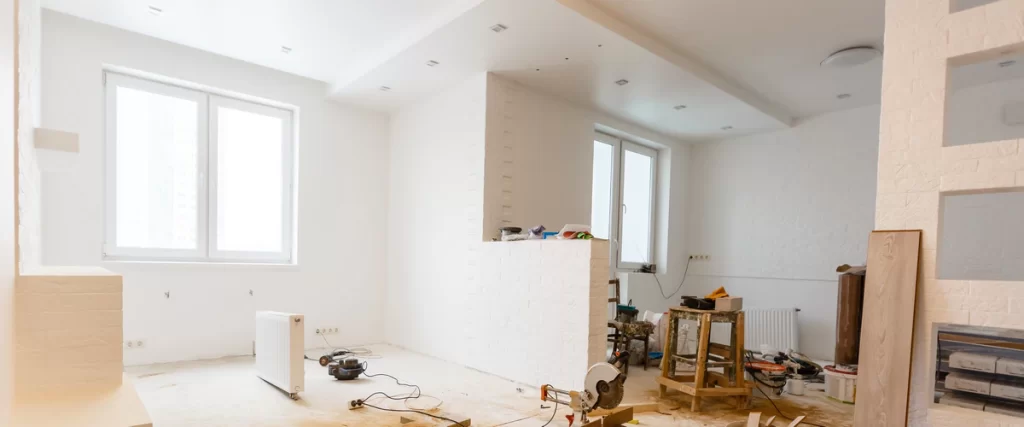
What Makes a Wall “Load-Bearing”?
A load-bearing wall carries weight from the structure above it, whether that’s another floor, the roof, or both, and transfers that load down to the foundation.
Interior walls that run perpendicular to your floor joists are often load-bearing. So are walls sitting directly above a beam in the basement or crawlspace.
Non-load-bearing walls, sometimes called partition walls, just divide spaces. They’re not doing any structural work. The catch is that you can’t always tell which is which just by looking.
This is exactly why a structural engineer needs to be involved before anything comes down.
A licensed engineer will evaluate the framing, assess the structural integrity of the area, and determine which structural beam is needed to replace the wall’s support function.
New Jersey Permits: You Can’t Skip This
New Jersey requires building permits for structural changes, full stop. Removing a load-bearing wall falls squarely into that category. Your local building department will want to see plans, and inspections will happen at various stages of the project.
The New Jersey Department of Community Affairs oversees construction codes statewide, and local municipalities enforce them.
If you pull work without permits and it comes out during a home sale or insurance claim, you’re looking at fines, mandatory remediation, and potential deal-killers.
Permits protect you. That’s the honest truth.
The Actual Process of Removing a Load-Bearing Wall

Once you have your engineer’s assessment and your permits approved, here’s roughly what the process looks like:
- Install temporary supports on both sides of the wall to hold the load while the permanent beam goes in.
- Remove the drywall to expose the framing.
- Check for hidden systems like electrical wiring, plumbing, or HVAC ducts running through the wall.
- Install the structural beam, typically a steel beam or engineered lumber, to carry the load that the wall was handling.
- Add king studs and posts at each end of the beam to transfer weight down to the foundation.
- Finish the space, patching the ceiling and floor, updating electrical if needed, and closing everything up.
Step three surprises a lot of people. Walls, especially on the first floor, often have electrical wiring or plumbing running through them. Relocating those systems adds cost and time to the project.
What Does It Actually Cost in NJ?
Costs vary based on the size of the opening, what’s inside the wall, and the type of beam required. Here’s a general breakdown:
| Item | Estimated Cost Range |
| Structural engineer assessment | $500, $1,500 |
| Building permit (varies by municipality) | $150, $600 |
| Beam and materials | $1,000, $5,000+ |
| Labor (contractor) | $3,000, $10,000 |
| Electrical/plumbing relocation (if needed) | $500, $3,000+ |
| Drywall and finishing | $500, $2,000 |
For a straightforward wall removal with a standard beam, most NJ homeowners spend somewhere between $5,000 and $15,000 when everything is included.
Larger openings, steel beams, or complex plumbing situations push that number higher.
How Open Concept Changes Daily Life
This part doesn’t get talked about enough. Removing walls genuinely changes how a home feels and functions, not always in ways people anticipate.
The upsides are real. Natural light travels further into the space, traffic flow improves significantly, and that sense of openness makes even a modest-sized home feel larger.
On the flip side, cooking smells travel freely now. So does noise. What used to be contained in separate rooms becomes part of the shared experience of the open layout. For most people, that’s a worthwhile trade. But it’s worth knowing going in.
Physical barriers also do something subtle: they give a room its identity.
Without them, you’ll want to think about how to define areas through furniture arrangement, lighting (like wall sconces or pendants), area rugs, or even French doors that maintain openness while offering visual separation.
Common Mistakes NJ Homeowners Make
A few things come up again and again on these projects:
- Assuming the wall isn’t load-bearing without checking. The location and orientation of a wall are clues, not confirmation.
- Starting demo before permits are approved. This creates real problems with inspections later.
- Underestimating what’s inside the wall. Electrical, plumbing, and HVAC surprises are extremely common in older NJ homes.
- Choosing an undersized beam. A structural engineer prevents this.
- Forgetting about the ceiling and floor. After a wall comes out, you’ll have a gap in the flooring and a line in the ceiling that needs to be addressed properly.
FAQ: Removing Load-Bearing Walls in New Jersey
How do I know if a wall is load-bearing? The most reliable way is to have a structural engineer assess it. General indicators include walls running perpendicular to joists, walls directly above a basement beam, and walls near the center of the house.
Do I need a permit to remove a wall in New Jersey? Yes, if it’s a structural or load-bearing wall. Your local building department handles permits, and the NJ DCA sets the code standards. Non-structural partition walls may not require a permit, but it’s worth confirming with your municipality.
How long does the project take? A straightforward load-bearing wall removal typically takes one to two weeks from start to finish, including framing, beam installation, and finishing work. More complex projects with plumbing or electrical relocation can take longer.
Can any contractor do this, or do I need a specialist? You need a licensed contractor with experience in structural work, and a separate structural engineer to design the beam solution. These are two different professionals with different roles.
Will removing a wall increase my home’s value? In most cases, yes. Open concept remodeling is consistently popular with buyers, and NJ real estate markets respond well to modernized layouts. The key is doing it correctly with proper permits and inspections on record.
What happens if I remove a load-bearing wall without support? The consequences range from sagging ceilings and cracked drywall to serious structural failure. It’s not a risk you want to take.
One More Thing to Consider
All of this: the engineer, the permits, coordinating contractors, dealing with what’s inside the wall, finishing the space afterward, it’s a lot to manage. Especially when you’re also living in the home during construction.
If you’d rather hand this project to a team that handles structural remodeling across New Jersey every day, the professionals at Renewal Solutions have the experience to take it from the planning stage through final inspection without the headaches landing on you.
Removing a load-bearing wall in your NJ home doesn’t have to be a stressful ordeal. Call us at (732) 788-4737 or message us here, and let’s talk through what your space could look like.