
You walk through your Middletown kitchen for the hundredth time, bumping into the corner of that wall again.
Maybe you’re imagining what life would be like with an open kitchen that flows into your dining room, where you could actually see your kids doing homework while you prep dinner. Sounds simple enough, right? Just knock down a wall or two, and suddenly you’ve got the dream kitchen every homeowner posts about online.
But here’s what many homeowners don’t realize until construction begins: opening up a kitchen in Middletown often turns into a much bigger project than anyone expects. What starts as “let’s just remove this one wall” quickly becomes a complex renovation project requiring permits and costs that weren’t in the original budget.
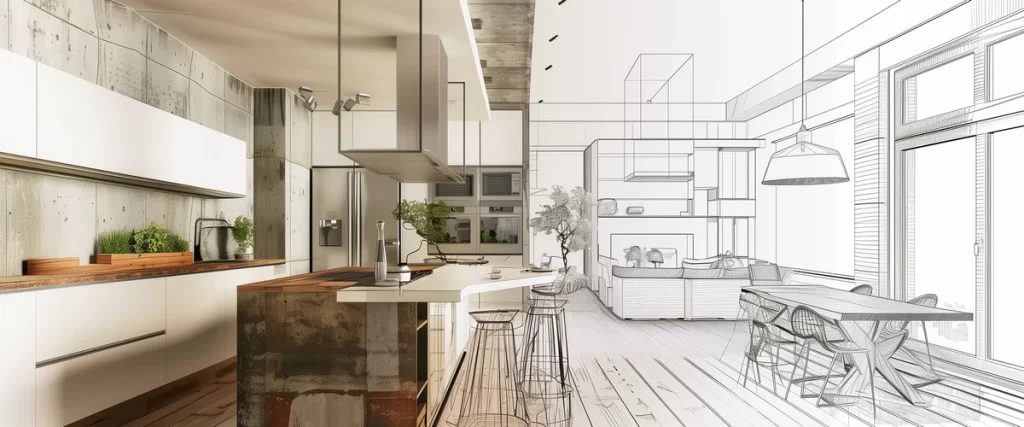
The Hidden Complexities of Kitchen Layout Issues
Before you grab a sledgehammer (please don’t), let’s talk about what actually goes into opening up a kitchen space. Most Middletown homes, especially those built before the 1990s, weren’t designed with the open-concept floor plans we love today.
| Challenge | Why It Matters | Typical Solution |
| Load-bearing walls | Support the entire structure above | Engineer assessment, beam installation |
| Hidden utilities | Electrical, plumbing, and HVAC run through the walls | Rerouting systems, updated permits |
| Outdated electrical | Old wiring can’t handle modern kitchen loads | Full electrical upgrade |
| Structural support needs | Floor joists and ceiling support require reinforcement | Additional framing, support beams |
Why Middletown, NJ, Kitchens Have Specific Challenges
If you’re in an older home here in Middletown, you’re dealing with construction methods and materials from a different era.
The stone foundations, the way rooms were compartmentalized, and the placement of key areas like the kitchen relative to the rest of the house all reflect priorities different from those homeowners expect today.
Older homes often have beautiful architectural details worth preserving. That old wall you want to remove might have original trim or molding that matches other parts of your house. Deciding what to save and what to sacrifice is part of the planning process that makes opening up these kitchens more complex.
What Makes Removing Walls in Kitchens So Tricky
That wall between your kitchen and dining room? There’s about a 60% chance it’s helping hold up your second floor. Load-bearing walls are the backbone of your house, and they’re not always where you’d expect them to be.
We’ve seen homeowners who were certain a wall was just there for show, only to discover it was supporting critical structural elements. Here’s the thing: you can absolutely remove a load-bearing wall, but it requires installing a beam system to redistribute the load.
This means hiring a structural engineer to create plans, pulling permits with your local building department, and probably spending several thousand dollars you hadn’t budgeted for.
Even non-load-bearing walls come with surprises. Old plumbing might be running through that space. Your HVAC ductwork could be hidden inside. Electrical wiring for half your house might snake through the wall you want gone.
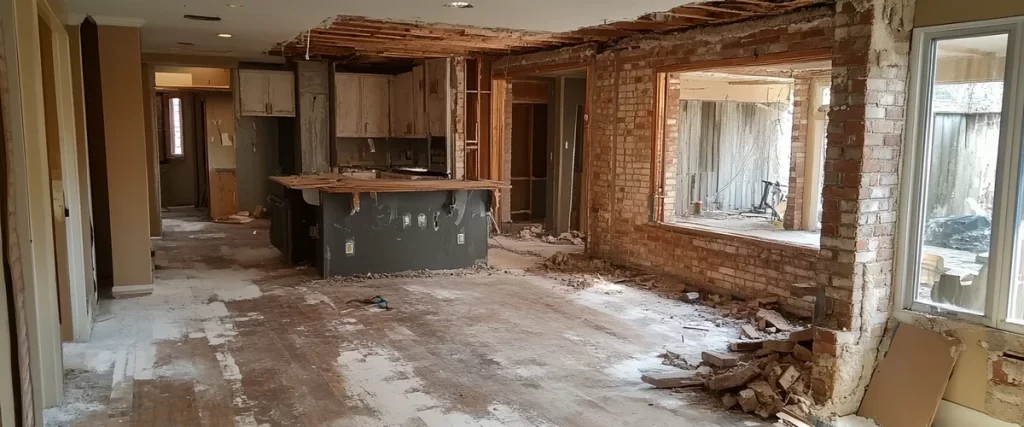
The Hidden Costs Nobody Mentions
Here’s what catches most homeowners off guard: once you start tearing into walls, you often open a Pandora’s box of issues that weren’t part of your original plan:
- Unexpected problems surface – Renovation projects reveal issues you couldn’t see before the walls came down. You’ve budgeted for demolition, the new beam, and drywall, but there’s usually more.
- Electrical code upgrades – Old wiring that doesn’t meet current National Electrical Code requirements must be brought up to code. Once you start working on your electrical system, everything needs updating, which adds cost.
- Storage and organization needs – Poor storage that seemed manageable before becomes obvious once you open up the space. You’ll need better solutions for baking trays and small appliances that are now visible from the living room.
- Natural light reveals imperfections – While beautiful, it highlights every flaw in your old cabinetry.
- Basement work – In Middletown homes, moving plumbing or electrical often means someone’s spending time in your basement running new lines. Unfinished basements are easier to work with; finished basements may need repairs afterward.
Working with the Right People Makes the Difference
Here’s where the wrong contractor can turn your renovation journey into a nightmare. Kitchen remodeling requires coordination among multiple trades: electricians, plumbers, HVAC technicians, carpenters, and, often, a structural engineer.
Design professionals and an interior designer can help you avoid common mistakes before construction begins. A principal designer or design director knows how to create clean lines and maximize your space without making decisions based solely on personal taste that might later limit your options. They understand how to balance beautiful kitchen aesthetics with function.
Good communication with your design team prevents situations where you realize too late that your new kitchen island blocks access to the oven, or that removing a wall eliminates storage you actually needed for everyday cooking.
What Actually Goes Into Creating Your Dream Kitchen
Let’s say you decide to move forward with kitchen remodeling. The process involves more than construction. You’re making decisions about everything from accent lighting to cabinet hardware, from the stone you want for countertops to whether you need drawers or shelves for specific storage needs.
Your kitchen design needs to accommodate how you actually live:
- Do you cook elaborate meals that require tons of prep space? You need serious counter space and probably task lighting in multiple zones.
- Got kids who do homework at the kitchen island? That changes your layout requirements completely.
The materials you choose affect both aesthetics and function. Kitchen countertops need to withstand daily use. Cabinetry should provide easy access to the items you use most. Under-cabinet lighting makes food prep safer and easier.
These aren’t just design choices. They’re decisions about how your new kitchen supports your life.
Frequently Asked Questions
How do I know if a wall in my kitchen is load-bearing?
You can’t tell just by looking. A structural engineer needs to assess your home’s framing and foundation to determine which walls are supporting weight from above. Generally, walls running perpendicular to floor joists and walls near the center of your house are more likely to be load-bearing, but there are plenty of exceptions. Getting a professional assessment before any demolition is the only safe approach.
Can I remove a load-bearing wall without replacing it with a beam?
No. If a wall is supporting structural weight, that load needs to go somewhere. A properly sized beam (steel or laminated lumber) must be installed to transfer the weight to supporting posts or the foundation. Skipping this step creates serious safety hazards and will definitely result in a failed inspection.
How much does it typically cost to remove a wall and install a beam in Middletown, NJ?
The cost varies widely based on the wall’s length, what’s hidden inside, and the amount of structural support needed. For a standard load-bearing wall removal with beam installation, expect anywhere from $3,000 to $10,000 or more. Complex situations requiring extensive rerouting of utilities or structural reinforcement can push costs higher.
Do I need permits to remove a wall in my kitchen?
Yes, almost always. Removing any wall, especially a load-bearing one, requires building permits in Middletown, NJ. You’ll need engineered plans showing the new structural support system. Working without permits can cause problems when you sell your house and may violate your homeowner’s insurance policy.
How long does a typical kitchen opening project take?
Plan for at least 2-3 weeks for the structural work alone, assuming no major surprises. A full kitchen remodel that includes opening up walls can easily take 2-3 months from start to finish. Timeline depends heavily on the complexity of your project, permit approval times, and material availability.
Maybe There’s an Easier Way
After reading all this, you might be thinking your kitchen opening project sounds more complicated than you imagined. You’d be right. Between structural engineers, permits, coordinating multiple contractors, and all the decisions about materials and design, turning your closed-off kitchen into an open, functional space is a serious undertaking.
If you’re ready to explore what’s actually possible with your Middletown, NJ, kitchen, call us at (732) 788-4737 or message us here. We’ll help you figure out if that wall can come down, what it’ll really take to open up your space, and how to create a kitchen that works for how you actually live.