
Coastal air does things to a bathroom that most homeowners don’t notice until the damage is already done. If your home was built before the early 2000s and sits within a few miles of the Jersey Shore, your bathroom’s waterproofing is almost certainly working against you.
Old construction methods, combined with salt-heavy humidity and freeze-thaw cycles, create a slow but steady failure behind tiles and inside walls.
The good news: once you understand what’s happening, fixing it the right way becomes a lot less daunting.
The Coast Is A Variable Your Bathroom Wasn’t Built For
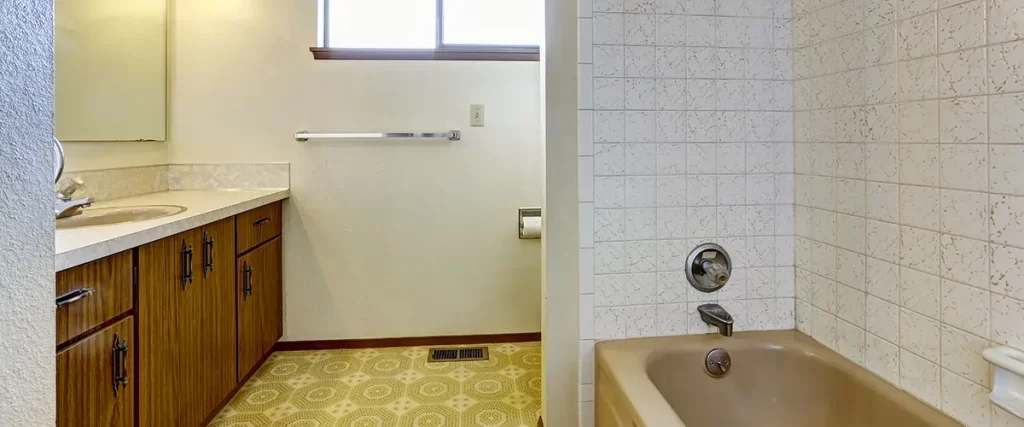
There’s a reason waterproofing standards have changed dramatically over the last 20 years. Older NJ homes, particularly those built between the 1950s and 1990s, were typically waterproofed with felt paper, a thin layer of mastic, or nothing at all behind the tile.
That might have held up reasonably well inland. Near the coast, it doesn’t stand a chance.
The combination of salt, moisture, and seasonal temperature swings pulls grout apart at the joints, leaving gaps where water enters quietly and sits for months.
By the time you see a stain on the ceiling below or feel soft drywall behind your vanity, you’re looking at a problem that started long before anyone could see it.
What’s Going Wrong Behind Your Tiles
Here’s a quick look at how older versus modern waterproofing systems compare:
| Feature | Pre-2000 Bathrooms | Modern Waterproofing Systems |
| Substrate material | Greenboard or drywall | Cement board or uncoupling membrane |
| Waterproofing layer | Felt paper or mastic | Full membrane (e.g., Schluter KERDI) |
| Grout type | Standard sanded grout | Modified or epoxy grout |
| Coastal performance | Poor | Designed for high-humidity conditions |
| Failure timeline | 5–15 years | 25+ years with proper installation |
A bathroom built with a proper uncoupling membrane and a waterproofing system like Schluter KERDI keeps water on the surface, where drains and towels handle it. Older systems let it migrate.
What a Proper Waterproofing Upgrade Involves

A full waterproofing renovation in an older NJ bathroom isn’t a patchwork job. It’s a gut-and-rebuild.
Here’s the sequence of events:
- Demo down to the studs. There’s no way to properly assess substrate damage without taking the tile and backer off completely.
- Inspect and replace framing where moisture has caused rot or mold. This is common in coastal homes and shouldn’t catch anyone off guard.
- Install cement board or an uncoupling membrane over the framing before anything else touches the wall.
- Apply a full waterproofing membrane at seams, corners, and penetrations. This is the step that older bathrooms completely skipped.
- Pre-slope the shower floor so water drains toward the drain, not toward the walls.
- Use modified thinset and grout rated for high-moisture environments when setting tile.
Schluter Systems publishes detailed installation guidelines for their KERDI waterproofing membrane that are worth reading if you want to understand what a gold-standard installation looks like in practice.
The Danger of Mold in Old NJ Bathrooms
In a coastal NJ bathroom with compromised waterproofing, mold behind tile isn’t a question of “if,” it’s a question of “how much.”
Black mold (Stachybotrys) and Cladosporium are the two most common species found in bathroom walls, and both thrive in the dark, damp, warm conditions that failed waterproofing creates.
Before any tile or finish material goes back up, any affected framing needs to be treated or replaced entirely.
Paint-over solutions are not remediation. A mold encapsulant on visibly affected studs, combined with full replacement of any porous material that absorbed moisture, is the minimum responsible approach.
If your renovation is coming after visible mold or a musty smell, it’s worth reading through how moisture problems can compound over time.
Our blog on why basement moisture in Matawan becomes a bigger issue than homeowners expect runs through the same underlying logic, even though it covers a different part of the house.
Frequently Asked Questions
Can I waterproof over existing tile instead of gutting the bathroom?
In theory, some topical waterproofing products can be applied over existing tile, but they don’t address what’s already behind the wall. If moisture has reached your substrate, sealing the surface traps it in rather than letting it dry out. For older NJ bathrooms with any history of grout cracks or soft spots, a full demo is almost always the more cost-effective choice in the long run.
How do I know if my bathroom already has moisture damage?
Tap on the tile with your knuckles. Hollow sounds indicate tile separation from the substrate. Soft spots near the tub surround, discoloration at grout joints, peeling paint on adjacent drywall, or a persistent musty smell are all indicators. A contractor can do a more thorough assessment, but those signs are usually enough to confirm the diagnosis.
What’s the lifespan of a properly waterproofed bathroom near the NJ coast?
With a properly installed full membrane system, 25 to 30 years is a reasonable expectation. The limiting factors are grout maintenance (re-caulking at the tub line every few years) and exhaust fan performance. A fan that can’t adequately clear steam means even a well-waterproofed bathroom will face higher-than-expected humidity over time.
We Take This Off Your Plate
Renewal Solutions handles bathroom remodels in Monmouth County with built-in waterproofing from the start, Schluter systems, cement board, licensed trade specialists, and a gut-and-rebuild approach that coastal homes actually need.
If your older bathroom is showing any of the signs covered here, you can check out everything we offer on our bathroom remodeling page to see how we approach projects like yours.
Ready to stop guessing and get a clear picture of what your bathroom needs? Call us at (732) 788-4737 or message us here. We’ll take a look and give you a straight answer.