
You’re finally doing it. The addition is getting framed, the backyard is getting overhauled, or the basement renovation you’ve been putting off is finally underway. Then the excavation crew stops and makes a call: there’s something buried down here.
Hidden oil tanks show up during home remodels in Middletown and Colts Neck more often than most homeowners expect, and when they do, they don’t just create a headache. They can shut a project down entirely.
This is what we’ll be covering: why buried tanks are so common in Monmouth County, how they complicate a remodel, what contaminated soil means for your property, and what the removal process actually looks like from start to finish.
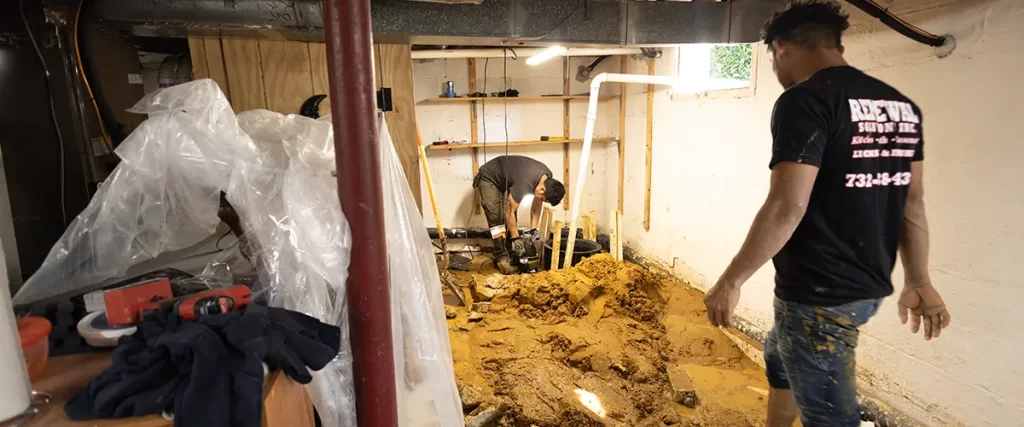
Why Middletown and Colts Neck Have Hidden Oil Tanks
Both townships have deep residential histories going back to the early and mid-1900s. A lot of those homes were built well before natural gas lines were standard.
From the 1940s through the 1970s, heating oil was how most people in the Northeast kept their homes warm through the winter. Builders buried 550 to 1,000-gallon steel tanks during construction, and fuel trucks made regular stops to top them off.
When homeowners eventually switched to gas or electric, many of those tanks were just left in the ground. No removal permit, no documentation, and sometimes no mention to future buyers.
Natural gas didn’t really become the dominant residential option until the late 1980s, so any home in the area built before then could have had an underground oil tank at some point in its history.
How a Buried Tank Stops a Home Remodeling Project
A smooth remodel depends on a predictable timeline, and an underground oil tank can throw it off. Here’s the typical sequence of events once a buried tank is discovered during excavation:
- Work stops immediately at the site.
- A contractor certified for underground storage tank closure under New Jersey’s UST rules must be called in.
- A permit is required from your local municipality before any removal.
- Soil samples are collected and sent to a certified lab.
- If a discharge is detected, the NJDEP must be notified within 15 minutes via their hotline at 1-877-WARNDEP.
- Your remodel waits.
Even a tank with no visible leaks can cause a multi-week delay in most cases. If contamination is present, the delay stretches into months.
The Cost of Soil Contamination

Steel corrodes over time, and old bare-steel tanks corrode a lot. Industry data suggests that somewhere between 30 and 50 percent of old underground oil tanks eventually leak.
When heating oil seeps into the soil, it moves. It saturates the surrounding soil and, over time, can reach groundwater, in some cases migrating well beyond your property line.
The NJDEP’s own remediation rules flag properties where the seasonal high groundwater table sits close to the surface as carrying heightened contamination risk, and the sandy coastal plain soils common across Monmouth County do little to slow that migration.
Remediation in New Jersey is not cheap. Straightforward cases can still cost thousands of dollars. Serious contamination? The bill can exceed $100,000, and standard homeowner’s insurance often won’t cover it.
There’s a state financial assistance program administered jointly by the NJDEP and NJEDA, but new applications for leaking residential tanks currently face a 3.5-year processing backlog.
What the Oil Tank Removal Process Looks Like
It’s not a simple pull-and-go job. A certified closure contractor needs to:
- Drain and clean the tank thoroughly
- Excavate the area around it
- Remove the tank using a crane or backhoe
- Collect and test soil samples from the excavation pit
- Backfill the site with certified clean material
- Restore the ground surface
After all that, a final report is submitted to the NJDEP requesting a No Further Action (NFA) letter.
That letter is what formally closes the case. Until it’s issued, the property carries an open environmental liability that can complicate both financing and future sales.
Getting Ahead Before Your Project Starts
If your home in Middletown or Colts Neck was built before 1990 and you’re planning any remodel that involves excavation, an oil tank sweep beforehand is one of the smarter investments you can make.
These sweeps use ground-penetrating radar and metal detection equipment to scan for buried tanks before a single shovel hits the ground.
You can also submit an OPRA (Open Public Records Act) request to your municipality asking for any tank removal permits ever issued for your address. It takes some time, but it can tell you a lot about what’s already been handled and what hasn’t.
Working with a remodeling contractor who already knows Monmouth County properties and how to navigate the unexpected is worth its weight when a project hits a snag like this.
Our team at Renewal Solutions has been remodeling homes across Middletown, Colts Neck, and surrounding Monmouth County communities, so dealing with the unexpected is already part of how we operate.
Frequently Asked Questions
Does New Jersey law require me to remove an underground oil tank before selling my home?
Not legally, but a home with an undocumented underground oil tank is much harder to sell. Many mortgage lenders won’t finance a purchase until the tank issue is resolved, and buyers’ attorneys routinely flag it as a liability. Most sellers prefer to handle removal before listing.
Can I abandon the tank in place rather than removing it?
NJ law allows abandonment in place under specific conditions. The tank must be fully emptied, cleaned, and filled with an inert material such as sand, foam, or concrete slurry. Soil testing is still required, and all documentation must be filed with the municipality. That said, full removal is almost always what buyers and their attorneys want to see.
What are the signs that a buried oil tank might be on my property?
A few common indicators: fill pipes or vent pipes sticking out near the exterior of the home or driveway, disconnected pipes in the basement that don’t lead anywhere, a slightly sunken or uneven section of your yard, or an old oil burner that’s no longer connected to any system. Any of these is worth a professional sweep before breaking ground.
How long does oil tank removal take in New Jersey?
For a clean removal with no contamination, the physical process can take one to two days, but permitting and soil testing take more time. A straightforward case from start to NFA letter might wrap up in a few weeks. If remediation is required, the timeline can stretch to months.
What does soil contamination from a leaking tank mean for my property value?
It means buyers will know, because disclosure is legally required. It can suppress offers, scare off financing, and in some cases, make a property difficult to sell at all until remediation is complete and documented. A properly closed case with an NFA letter restores the property to clean standing.
Get the Right Team From the Start
Navigating hidden oil tanks, NJDEP notifications, certified contractors, soil testing labs, remediation timelines, and municipal permits, all while trying to get a remodel done, is a lot.
If you’re planning a home remodeling project in Middletown, Colts Neck, or anywhere in Monmouth County and you’d rather not manage the unexpected alone, that’s exactly what we’re here for. Renewal Solutions handles the complications so your project keeps moving.
Call us at (732) 788-4737 or message us here to talk through your project before it starts.