
Here’s the honest answer: it depends on your budget, your timeline, and how much disruption you can handle.
Whole home remodeling gets everything done at once, while room-by-room remodeling lets you spread out the cost and work at your own pace. Both approaches have real advantages, but each also has trade-offs worth knowing before you commit.
If you’re a homeowner in New Jersey weighing these two paths, you’re probably asking yourself: Will I save money going room by room? Is a complete remodel worth the upfront cost? How do I keep my daily life from falling apart during a renovation?
In this article, we’ll cover all of that.
What Whole-Home Remodeling Actually Means
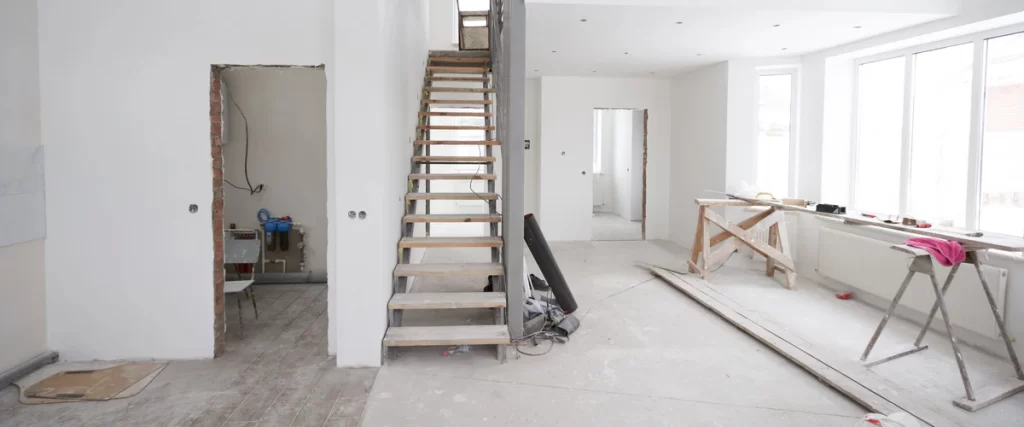
A whole home remodel means tackling the entire house, or at least most of it, under one renovation plan.
One contractor, one schedule, one concentrated period of construction. That means kitchens, bathrooms, flooring, living spaces, and maybe even basement finishing, all handled together.
The biggest upside here is cohesive design. When everything is done at once, you end up with consistent paint colors, matching materials, and a seamless design that flows from room to room. That’s hard to achieve when you’re renovating room by room over several years.
There’s also a practical efficiency argument. Contractors can often offer better pricing when they’re managing a larger project. Labor costs get spread across the whole job, and there’s less mobilization, fewer separate permits in some cases, and no stopping and starting.
The downside? The upfront cost is significant, and temporary relocation may be necessary. Not everyone can or wants to leave their home for weeks during a full home remodel.
The Room-by-Room Approach: Slower, But More Manageable

Room-by-room renovations let you focus on high-impact spaces first, spread costs over time, and stay in your home throughout the process.
Many New Jersey homeowners take this route because it makes more financial sense for their situation. You tackle the living room one year, the master bathroom the next, and so on.
You stay in control of the budget, and you’re not hit with one massive bill all at once.
It’s also worth noting that room renovations give you more time to make design choices. You can test a paint color, live with it for a year, and adjust in the next phase.
But there are clear downsides too:
- Design inconsistency, if you’re not following a master plan from the start
- Labor costs may be higher long-term because you’re paying for multiple project mobilizations
- Living through a drawn-out renovation can affect your daily routine for years
- A single room remodel often feels incomplete because it highlights how dated the rest of the house looks
Whole-Home vs. Room-By-Room Remodeling: Side-by-Side Comparison
| Factor | Whole-Home Remodel | Room-by-Room Remodel |
| Upfront Cost | Higher | Lower per phase |
| Total Long-Term Cost | Often lower | Can be higher overall |
| Design Cohesion | Easier to achieve | Requires careful planning |
| Disruption to Daily Life | Intense, concentrated | Spread out over years |
| Project Management | One team, one timeline | Multiple phases and schedules |
| Living Arrangements | May require relocation | Usually can stay at home |
| Finished Look | Seamless | Can vary if there is no clear plan |
When a Whole House Remodel Makes More Sense
If your home needs work in multiple areas and you’re planning to stay in it long-term, doing everything at once usually wins out.
Here’s when it’s the smarter call:
- Your home has structural, electrical, or plumbing issues that need addressing anyway
- You’re planning a major lifestyle change, like a growing family or aging-in-place modifications
- You want custom cabinetry, flooring, or fixtures that run throughout the entire house for a cohesive look
- Temporary relocation is feasible for your family
The U.S. Department of Housing and Urban Development publishes guidance on home improvement financing and renovation standards that can help homeowners understand what’s required for larger projects, especially if you’re considering loan-backed renovation programs.
When the Room-by-Room Approach Works
The phased remodel isn’t always a compromise. It’s a legitimate strategy when used intentionally.
It works best when:
- Your budget is tight, but your home is mostly in good shape
- Only one or two rooms have immediate needs
- You want to prioritize high-impact spaces like a kitchen or primary bathroom first
- Your living arrangements make a whole-house remodel impractical right now
The key is having a clear plan from day one. If you’re going room by room, know what the finished home will look like before you start. That means planning for consistent flooring, a unified color palette, and materials that work together.
Without that upfront vision, you risk a home that feels patched together rather than intentional.
The Design Consistency Problem
This is where many homeowners run into trouble with room renovations. You remodel the kitchen with modern finishes, then two years later, you remodel the living room with slightly different materials because trends shifted or you changed your mind. Suddenly, the home doesn’t quite flow.
A good contractor will push you to make those decisions early, even if you’re phasing the work.
What flooring runs through the whole house? What trim profile? If you understand those decisions upfront, the room-by-room approach can create a result that looks just as cohesive as a whole-home project.
New Jersey-Specific Considerations
NJ has some of the highest renovation costs in the northeast, so cost efficiency matters here more than in many other markets.
Permit requirements vary by municipality, and towns across Monmouth County, Ocean County, and the surrounding areas have their own inspection timelines and code requirements.
If you’re working with a contractor who knows the local landscape, like the team at Renewal Solutions Inc., that local knowledge saves time and avoids expensive surprises mid-project.
FAQ
Is whole-home remodeling more cost-effective than room-by-room? Often, yes. The total project cost for a whole home remodel is usually lower than doing the same work in separate phases, because you avoid multiple mobilization fees and can negotiate better rates with contractors for a larger scope of work.
Can I stay in my home during a whole-house remodel? It depends on the scope. If the kitchen and bathrooms are both out of commission, staying is difficult. Many homeowners arrange temporary housing during the most intensive phases, then return once those key areas are functional.
How do I keep a consistent style when remodeling room by room? Start with a design plan that covers the whole house, even if you’re only executing it one room at a time. Lock in your flooring, trim, and color palette early so each phase builds toward the same finished home.
What rooms should I remodel first? Kitchens and bathrooms offer the highest return on investment and improve daily life the most. If budget is the main concern, start with whichever room causes the most daily friction.
Do I need separate permits for each room renovation in NJ? Usually, yes. Structural changes, electrical work, and plumbing upgrades each require permits regardless of how many rooms are involved. Your contractor should handle permitting as part of the project.
What’s a phased remodel? A phased remodel is a planned, staged approach to renovating multiple areas of a home over time. The keyword is “planned.” Done without a master plan, it often leads to design inconsistency and higher total costs.
Skip the Headaches, Let Someone Handle It
If reading all of this made your renovation feel more complicated than it did before you started, that’s actually a good sign. It means you’re thinking through it seriously.
But planning a whole home remodeling project, or even a smart room-by-room renovation strategy, takes real expertise to execute well.
Rather than spend months trying to coordinate all of this yourself, it might be worth speaking with someone who does this every day.
Call us at (732) 788-4737 or message us here, and we can walk through your home, your goals, and what approach actually makes sense for your situation.