
Morganville is full of homes built during the 1970s building boom, and a lot of those kitchens have never been touched.
If yours still has laminate countertops from the Carter administration and upper cabinets that stop a foot short of the ceiling, you’re probably ready to do something about it.
A 1970s kitchen update involves more than swapping out cabinet doors, though. There’s layout work, often electrical and plumbing updates, sometimes a structural surprise or two, and a lot of decisions to make before a single thing gets demolished.
What Makes 1970s Kitchens Different From a Regular Remodel
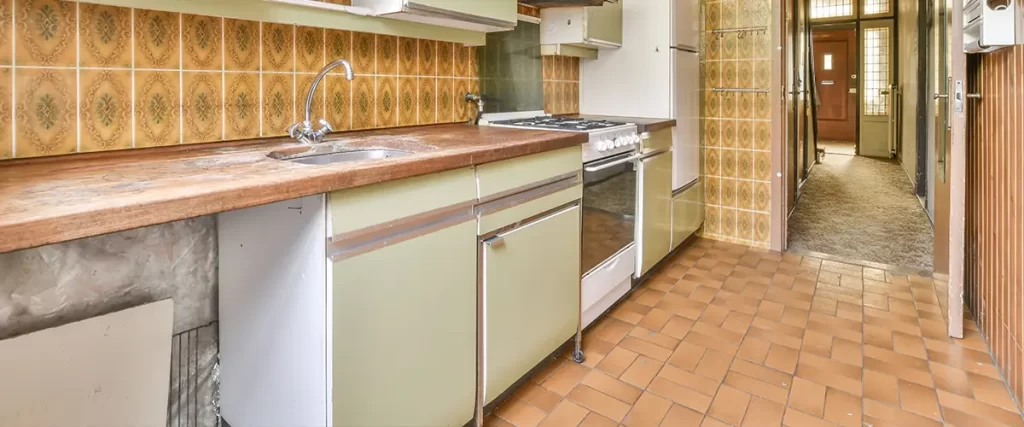
Most Morganville homes from that era were built with a closed kitchen, walls on three sides, a small window over the sink, and just enough room to cook without bumping into anyone else.
The layout made sense then. Families ate in dining rooms, not at islands. Life happened in separate spaces.
The push now is for something completely different: open sightlines, connection to the living area, a place where people can gather while someone cooks.
On top of that, older kitchens come with a few things that need attention:
- Aluminum wiring, which was used heavily in the late 1960s and 1970s, and requires evaluation before adding new appliances or outlets
- Single-circuit layouts that weren’t designed to handle modern appliance loads
- Original plumbing that may need to be rerouted to accommodate a new sink location or island
- Asbestos, which the EPA’s guidance on asbestos-containing materials notes, was commonly used in floor tiles, adhesives, and ceiling texture in homes built before 1980
The Most Common Changes Morganville Homeowners Make
There’s a wide range of what people do when they update a 1970s kitchen. Some homeowners go full gut renovation. Others target specific problems.
Here’s a table of the most common upgrades and what they typically involve:
| Upgrade | What’s Actually Happening |
| Cabinet replacement | Full removal of original cabinetry, new boxes, doors, and hardware installed to ceiling height |
| Countertop swap | Laminate or tile removed, substrate prepped, quartz or granite installed |
| Opening a wall | Load-bearing assessment, beam installation, structural repair, drywall, paint |
| Flooring update | Tile or vinyl removed (sometimes with asbestos testing first), new LVP or hardwood laid |
| Lighting upgrade | New recessed lighting, under-cabinet strips, updated switches and dimmers |
| Appliance modernization | New gas or electric hookups, updated outlet placement, appliances installed |
| Backsplash | Old tile removed or covered, new tile installed behind range and countertops |
The projects that tend to deliver the most noticeable change are those that address both layout and finishes. A kitchen that looks beautiful but still feels cramped and closed off will always leave something to be desired.
What Does a 1970s Kitchen Remodel Cost in NJ?
This is the question everyone wants answered first, and the honest answer is that it depends heavily on scope.
At Renewal Solutions, completed projects in Monmouth County have ranged from the low $60,000s to well over $68,000 for mid to large-sized kitchens with structural and layout changes.
A 380 sq. ft. kitchen in Manasquan came in at $68,000 with new cabinetry, quartz countertops, a full electrical reroute, LVP flooring, and recessed lighting. A similar-sized project in Wall came in at $63,000 and included removing a 13-foot separation wall and installing a 22-foot support beam.
For a 1970s kitchen, the additional costs that catch people off guard are usually:
- Structural work when walls are removed
- Electrical panel and wiring upgrades for modern load requirements
- Asbestos abatement if old floor tile tests positive
- Soffit removal, which was extremely common in 1970s kitchens and reveals surprises in the ceiling
Budgeting a 20-30% cushion above your initial estimate is a smart habit for any project that involves opening walls or working on original plumbing and electrical.
Opening Up the Floor Plan: The Most Transformative (and Complicated) Move

Many homeowners want to take down the wall between their kitchen and living room. It’s the single change that makes the biggest visual difference in a 1970s home.
It’s also the one that requires the most planning.
Most walls in that direction are load-bearing, which means a structural beam must be installed before anything comes down. Our blog on removing load-bearing walls in NJ goes through exactly what that process involves.
When it’s done right, removing that wall completely changes how the house lives. The kitchen stops being a separate function and becomes the centerpiece of the home.
Materials Worth Upgrading in a 1970s Kitchen Renovation
Here’s a quick look at what Morganville homeowners are replacing most often, and what they’re replacing it with:
- Original laminate countertops give way to quartz almost universally now. Quartz holds up without sealing, resists staining, and looks current without being trendy.
- Original cabinets are typically replaced entirely rather than refaced, especially in 1970s kitchens, where the cabinet boxes are often particleboard with significant moisture damage. Solid plywood is the standard for durability.
- Original vinyl floor tile comes up with the floor and sometimes requires testing before the demo begins. LVP (luxury vinyl plank) flooring and hardwood are both popular replacements, but LVP is significantly lower-maintenance and handles moisture better.
Frequently Asked Questions
Do I need to test for asbestos before demoing a 1970s kitchen floor?
It’s strongly recommended. Vinyl floor tiles and the adhesive beneath them in homes built before 1980 commonly contained asbestos. A certified inspector can test a sample before the demo begins. If the test comes back positive, abatement must occur before any removal work begins.
How long does a full 1970s kitchen remodel take?
A full gut renovation with structural changes typically runs four to six weeks from demo to completion. If the scope is more limited, three to four weeks is more common. Permit timelines can add time depending on how quickly the municipality reviews.
Can my house stay livable during the remodel?
In most cases, yes. The fridge and microwave will be relocated to another room, and a contractor worth working with will take care to contain dust and debris. Cooking is limited for the duration, but the house stays fully functional.
What’s the ROI on a kitchen remodel in New Jersey?
According to the 2025 Cost vs. Value Report, a minor kitchen refresh, think new cabinet fronts, updated countertops, and appliance swaps without moving walls, returns around 113% of its cost at resale nationally, making it the strongest-performing interior project in the report. A full gut renovation, which is what most 1970s kitchens require, typically recovers closer to 50%. That gap doesn’t mean a full remodel is the wrong move. It means the value you’re building is partly financial and partly the years of daily use you get in a kitchen that finally works.
You Could Just Let Us Handle All of This
Going through every one of these decisions on your own is a lot. Most homeowners start down that road and quickly realize the value of having a team that has done it all before.
Renewal Solutions has completed over 30 kitchens in Monmouth County in the past year alone, many of them in homes exactly like yours.
If your 1970s kitchen has been on your mind, take a look at what a well-planned remodel looks like on our kitchen remodeling page, then call us at (732) 788-4737 or message us here.